
When fall detection in assisted living in a must, not an option
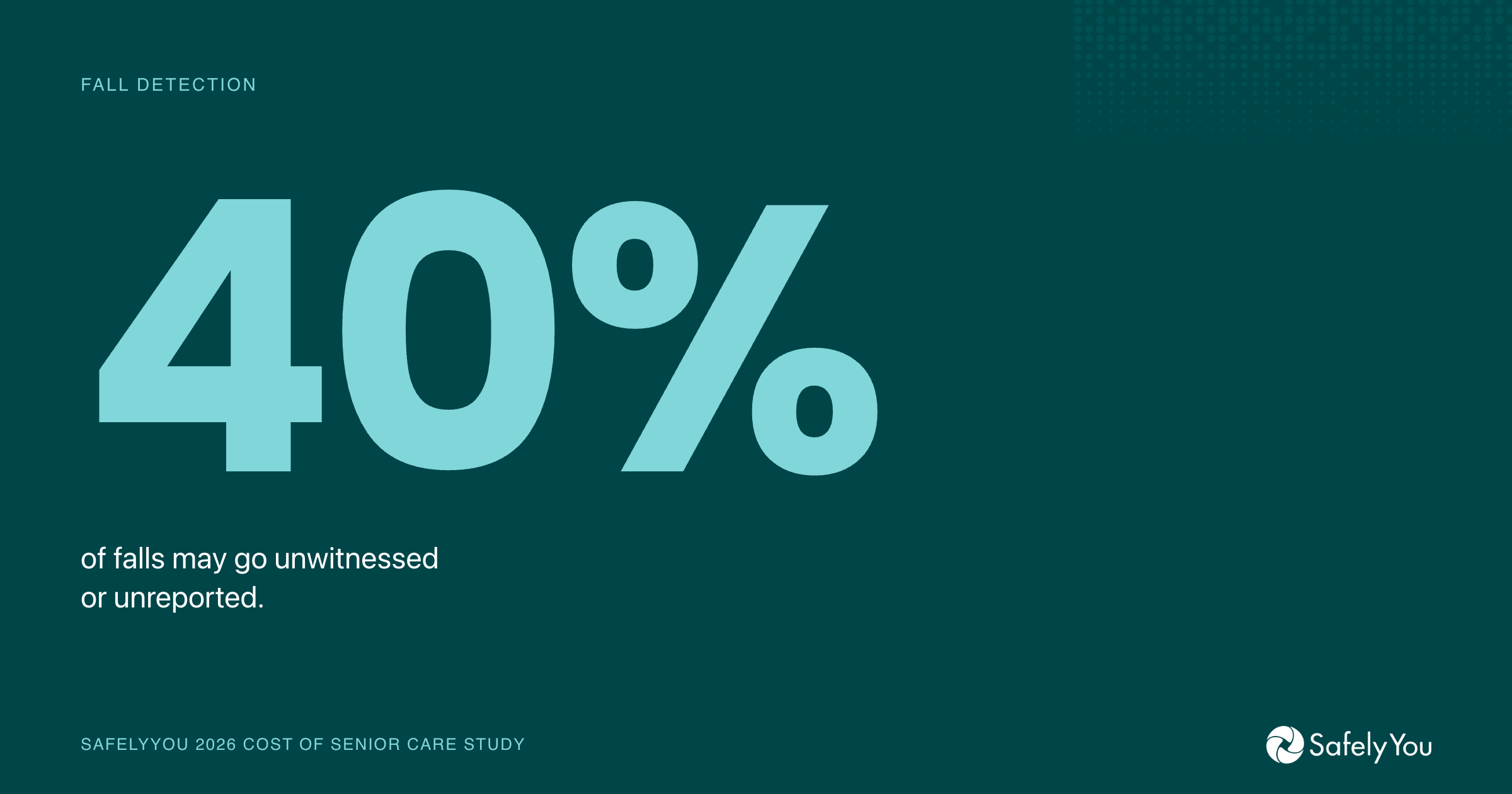
When a resident falls, the minutes that follow matter. But in assisted living, staff can’t be everywhere at once, and not every fall happens where someone can see it. Up to 40% of falls may go unwitnessed or unreported, according to SafelyYou’s 2026 Cost of Senior Care Study. Staff may not learn about those falls until much later, if at all. That delayed discovery can lead to a preventable hospital stay, a move to a higher care level, or repeat unwitnessed falls. That’s why fall detection in assisted living is so mission critical. Understanding what happens when a fall goes undetected is the first step toward better resident outcomes, and toward giving care teams the information they need to act sooner.
The effects of unseen falls in assisted living
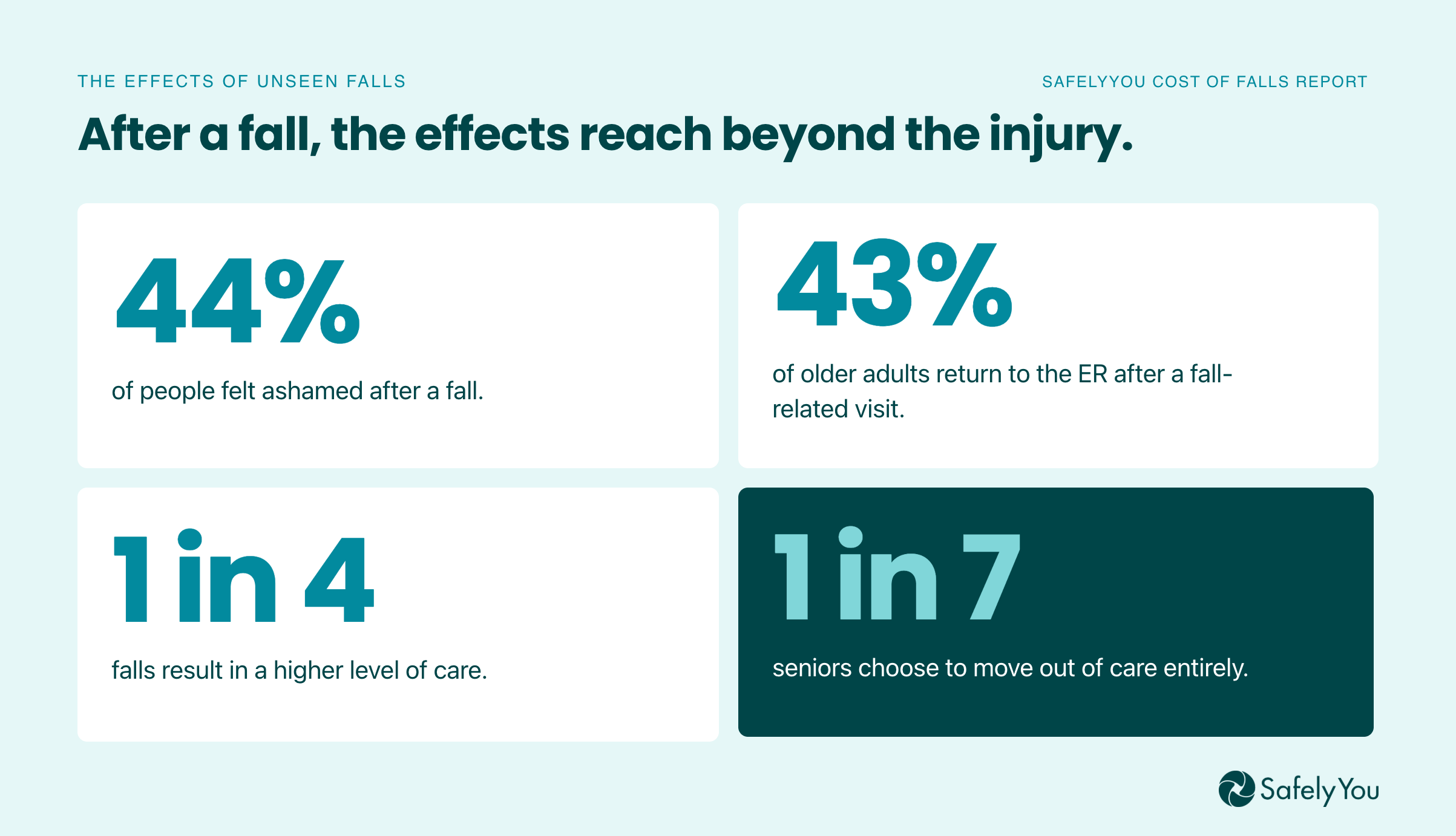
A fall in a private unit can easily go unnoticed, especially overnight or when staff are stretched thin. Even residents who can call for help may hold back. In SafelyYou’s inaugural Cost of Falls Report, 44% of people said they felt ashamed after a fall, a feeling that can lead to isolation and dealing with pain in silence.
For residents living with cognitive impairments, like dementia, reporting a fall may not even be possible. Nurse call systems, which 81.7% of leaders surveyed for the Cost of Senior Care Study use, depend on a resident pressing a button. But a disoriented or injured resident may never make that call. They often can’t explain how or why they fell, and the same report found they end up in the ER more often as a result.
More than one-third of hospital patients 70 and older develop delirium, and up to half do after high-risk procedures, such as hip fracture repair, according to research cited in the Cost of Falls Report. Repeat visits are also common with nearly 43% of older adults returning to the ER after a fall-related ER visit.
Even after residents are discharged, the effects of a fall can destabilize their living situation. One in 4 falls result in a higher level of care, and 1 in 7 seniors choose to move out of care entirely, costing them the independence that they were striving for from assisted living in the first place.
Outdated care plans can set up the next fall
A care plan only reflects what staff know. When a fall goes unreported, the plan may keep directing care for a resident whose needs have already shifted, and interventions reflect who the resident was before the fall, not who they are now.
Early warning signs are also easy to miss. Subtle gait or balance changes often aren’t caught until a fall occurs, according to the Cost of Senior Care Study. A resident might be shuffling more, steadying themselves on furniture, or hesitating before standing, and details like these don’t always make it into a chart. Without a documented fall or near-fall, there may be no clear trigger to reassess.
Even after staff spot a change, updates take time. Among assisted living leaders, 40% update care plans every one to three months, and 27% wait four to six months. Depending on the review schedule, a resident’s needs could change several times between updates without the plan keeping pace.
That lag may leave room for repeat falls. The Cost of Falls Report shows that 45% of residents fall at least three times a year. Each fall that goes unwitnessed or unreported can be a missed chance to adjust care, and the pattern may continue until a fall is serious enough that it can’t be overlooked.
How AI fall detection in assisted living shortens the wait for care
Delayed care, missed injuries, and outdated care plans all trace back to how quickly staff learn about a fall. AI fall detection alerts staff even when no one saw the fall and the resident didn’t call for help.
With SafelyYou Safety AI®, AI video technology works alongside clinical expertise to detect falls and help prevent the next one. SafelyYou Halo® builds on that fall detection, adding virtual check-ins and ambient care tracking in one platform.
When a resident falls, Safety AI detects it and alerts the on-site team within seconds. The alert includes clear video of the event, so caregivers know how the resident fell before they arrive.
That context helps clinical teams assess injuries more accurately and make better informed decisions about ER transfers. This matters most for residents with dementia who often can’t explain what happened.
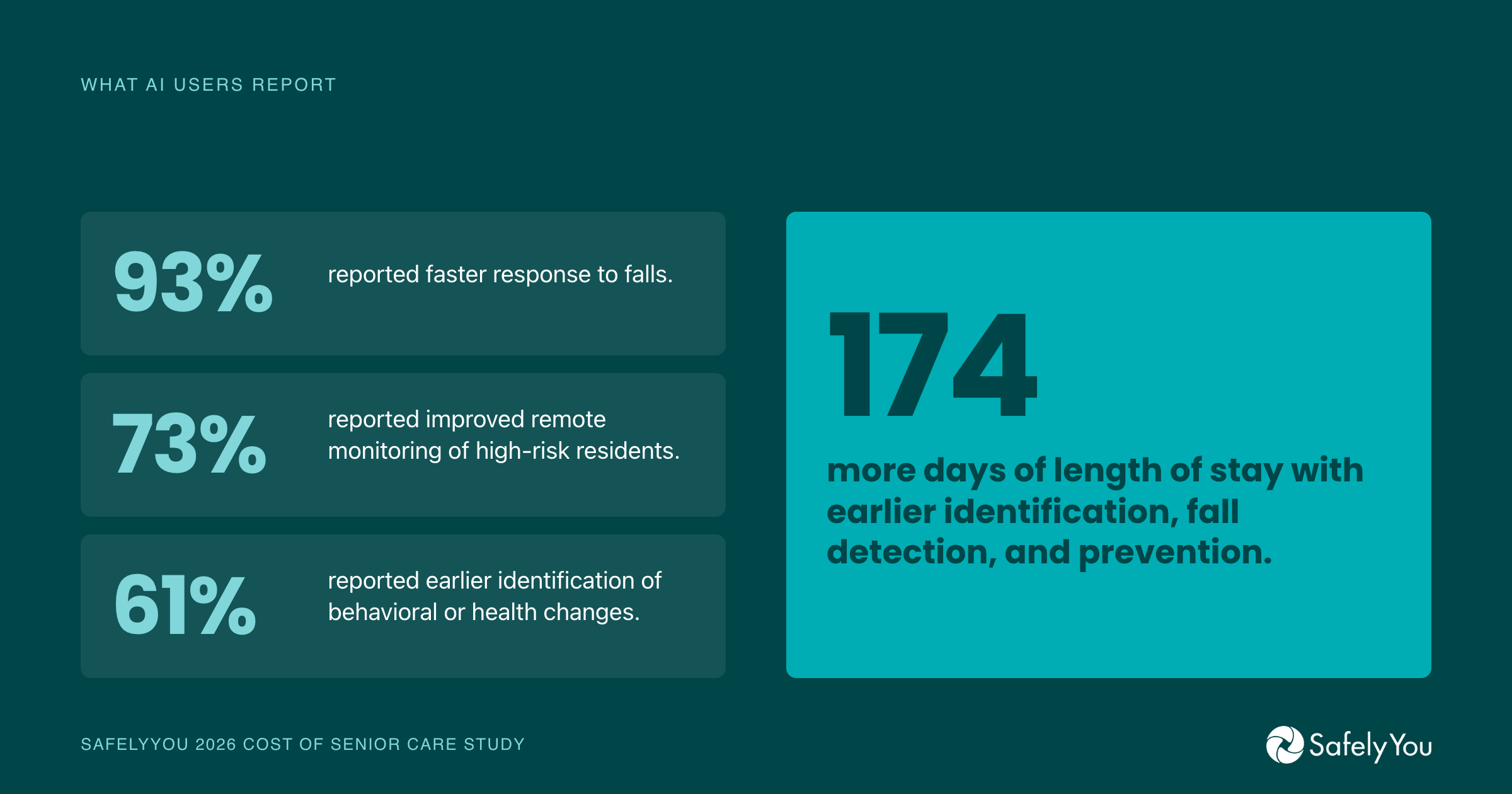
And communities already using AI tools see the difference. In the Cost of Senior Care Study, 93% of AI users reported faster response to falls, and 73% reported improved remote monitoring of high-risk residents.
How fall data keeps care plans current
A fast response helps the resident in the moment, but preventing the next fall depends on understanding why this one happened. Video of each event gives care teams that answer, along with details they can bring straight into the care plan.
SafelyYou clinical experts, including RNs, OTs, and PTs, review fall incidents across 50 data points and meet with community teams in fall huddles. Together, they look for root causes and build interventions around each resident’s needs.
Sometimes the answer changes the approach entirely. The Cost of Falls Report found that 33% of unwitnessed on-the-ground events are intentional — the resident lowers themselves to the floor without injury but can’t get back up. Those residents need a different intervention than someone who lost their balance.
In one community from the report, a resident with repeated falls kept packing a suitcase and watching the window. Once staff learned he’d traveled often as a corporate executive, SafelyYou’s clinical team helped them give him a sense of purpose through morning rounds and administrative tasks. He had no more falls.
That kind of insight helps care plans keep up with residents’ changing needs. Among AI users in the Cost of Senior Care Study, 61% reported earlier identification of behavioral or health changes. SafelyYou analyses in the same study found that earlier identification of rising acuity, combined with fall detection and prevention, can extend length of stay by 200 to 250 days.
See what your current approach may be missing
Nurse call systems and fall protocols cover the falls staff witness or residents report. The harder question is how many happen between rounds and never make it into the incident log.
Earlier detection gives care teams the chance to treat injuries sooner, maintain accurate care plans, and help residents stay longer. See how SafelyYou’s fall detection can change outcomes for your residents. Schedule a demo.
Frequently Asked Questions
How common are unwitnessed falls in assisted living, and why does it matter?
More than you might think — up to 40% of falls may go unwitnessed or unreported. When a fall goes undetected, care teams lose the chance to treat injuries early, update care plans, and prevent the next one. That gap is where outcomes start to deteriorate.
Why can’t residents just use their nurse call system to report a fall?
Nurse call systems depend on the resident pressing a button — which isn’t always possible. Residents who are injured, disoriented, or living with dementia may not be able to call for help. And SafelyYou’s Cost of Falls Report found that 44% of residents felt ashamed after a fall, meaning many who could call for help simply don’t.
How does AI fall detection in assisted living actually improve care plan accuracy?
When a fall goes unreported, the care plan keeps reflecting who the resident was before the fall — not who they are now. AI fall detection gives care teams documented, video-backed insight into every fall, so interventions can be updated in real time rather than waiting for the next scheduled review cycle, which for 27% of communities is every four to six months.
How quickly does SafelyYou alert staff after a fall is detected?
Safety AI® detects a fall and alerts the on-site care team within seconds — and the alert includes clear video of the event so caregivers know what happened before they even arrive. In SafelyYou’s Cost of Senior Care Study, 93% of AI users reported faster response to falls as a result.
What’s the difference between detecting a fall and preventing the next one?
Detection gets caregivers to the resident faster. Prevention requires understanding why the fall happened. SafelyYou’s clinical team — including RNs, OTs, and PTs — reviews every fall across 50 data points and works with community teams in fall huddles to identify root causes and build individualized interventions. That clinical layer is what turns a fast response into a pattern of fewer falls over time.