For a caregiver who has worked the same hall for three years, small changes stand out. One resident starts steadying herself on furniture during her walk to the dining room, while another takes an extra beat to rise from his chair. Neither detail would likely make its way onto a chart, but both could point to rising fall risk. That knowledge takes years to build and one two-week notice to lose. That is why caregiver retention is so important to senior living communities.
When a seasoned caregiver leaves, their replacement inherits the care plan without any context. Senior living staffing optimization usually starts with schedules and coverage. It works better when it starts with the caregivers who already know the residents, because every departure resets what the team knows.
Continuity keeps residents safer
Tenured caregivers learn what normal looks like for each resident. They know who tires halfway down the hall, who leaves their walker behind after meals, and who gets up at night without calling for help. That baseline makes early warning signs visible.
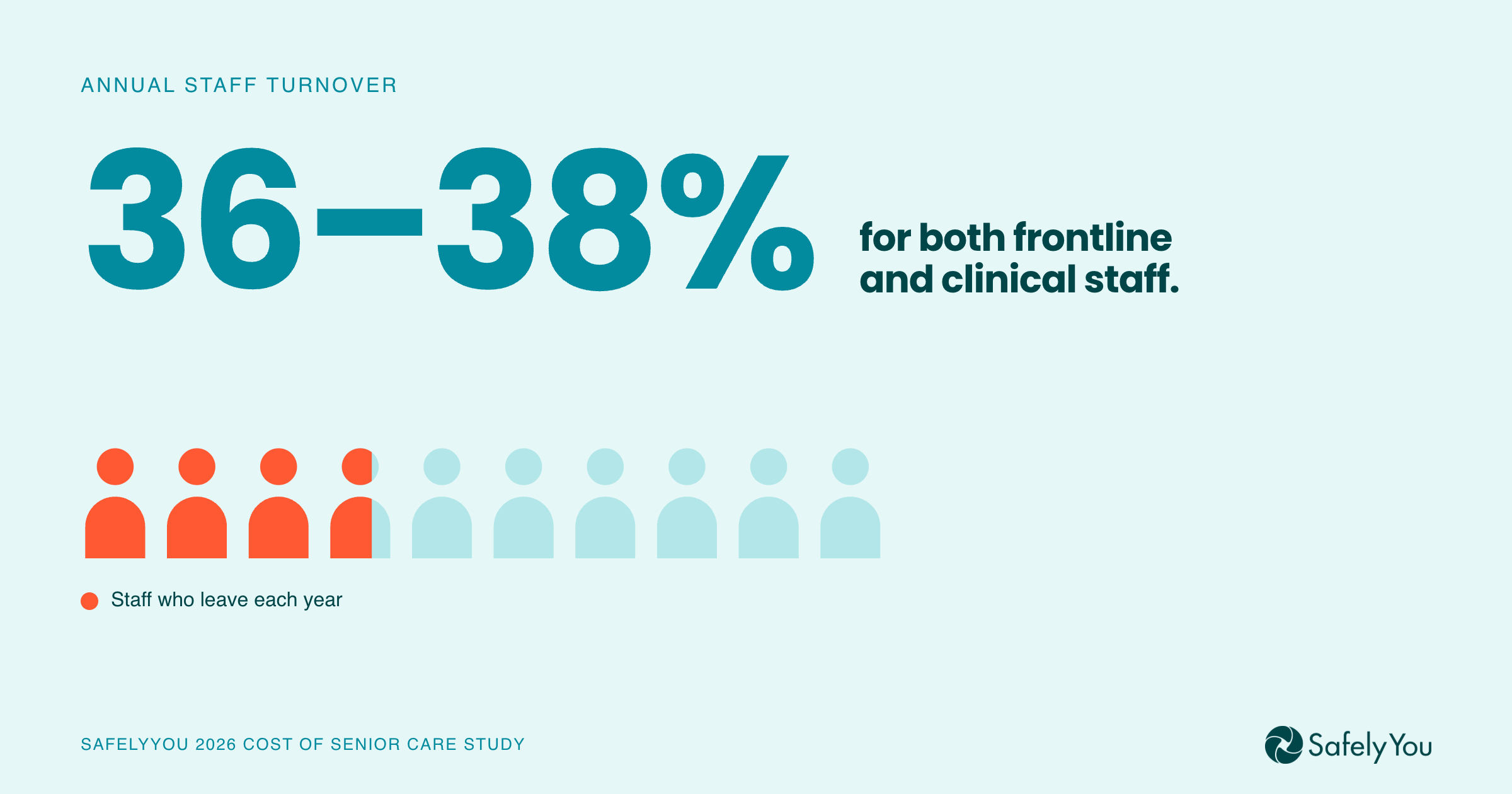
Turnover erases it. SafelyYou’s 2026 Cost of Senior Care Study found annual turnover of 36% to 38% for both frontline and clinical staff. Leaders in the same study cite reduced continuity of care, declining documentation quality, and a higher risk of incidents among turnover’s indirect costs.
The gaps surface in daily care as well. Only about half of leaders report daily task completion, and many say changes in mobility or behavior go unnoticed until an incident occurs. The study describes a cycle: delayed tasks lead to missed cues, missed cues raise safety risk, and safety events add work that feeds burnout and turnover.
For operators, that cycle turns a staffing problem into a resident safety problem. Every departure resets the knowledge that helps caregivers prevent the next fall.
Caregiver turnover outpaces the cost of empty units
The Cost of Senior Care Study also puts the cost of replacing a frontline caregiver at about $7,150 in recruiting, onboarding, and training. That figure covers only the direct expense. Overtime and agency shifts cover the vacancy, supervisors spend extra hours training new hires, and those indirect costs often exceed the direct ones.
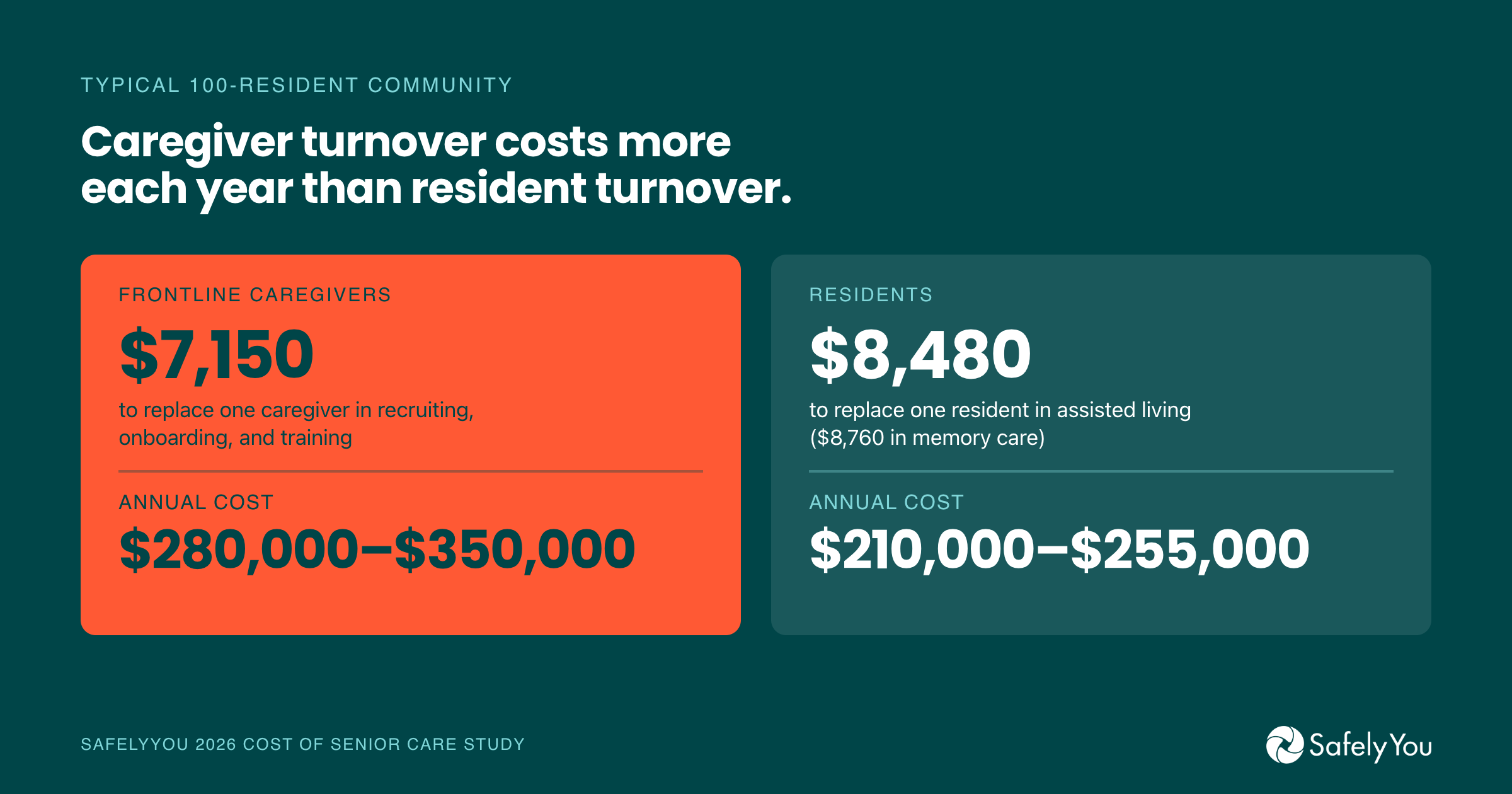
Compare that with the cost of replacing a resident: roughly $8,480 in assisted living and $8,760 in memory care. Operators track occupancy closely, but caregiver departures rarely receive the same scrutiny. The study’s model for a typical 100-resident community puts annual frontline turnover at $280,000 to $350,000, which exceeds the $210,000 to $255,000 lost to resident turnover.
The two costs also compound. Leaders link many resident transitions to falls and changes in condition, the same risks that climb when experienced caregivers leave. A community that keeps losing caregivers puts its census at risk as well.
Equipped caregivers stay longer
SafelyYou analytics suggest up to 40% of falls in assisted living and up to 80% in memory care go unwitnessed or unreported. Without answers, caregivers make judgment calls about injuries and ER transfers, and then handle the paperwork, family calls, and follow-up.
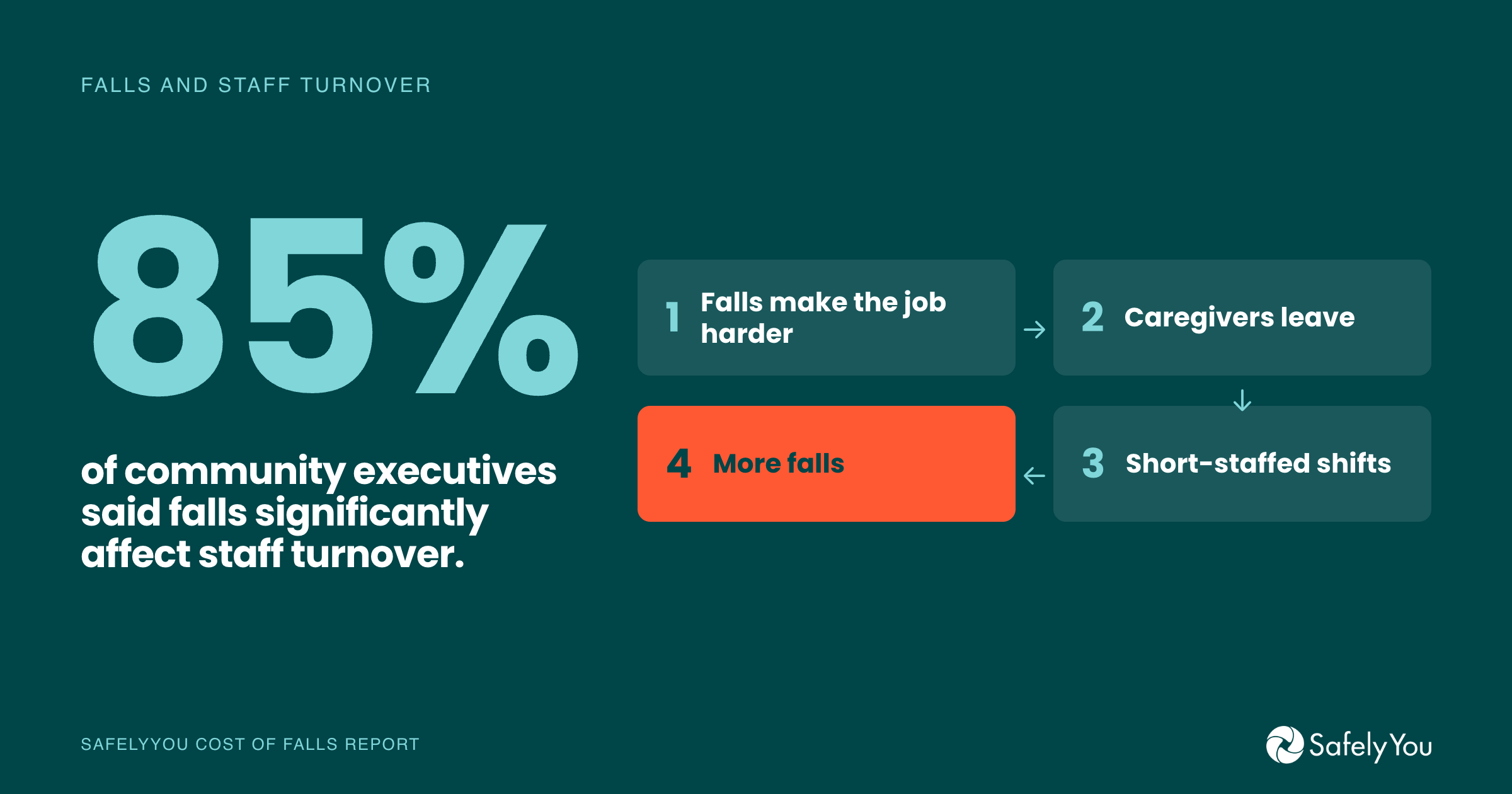
That strain wears people down. Research cited in the Cost of Senior Care Study links reactive, constant-triage work to burnout and turnover. Additionally, in SafelyYou’s Cost of Falls Report, 85% of community executives said falls significantly affect staff turnover. The report describes a loop in which falls make the job harder, caregivers leave, and short-staffed shifts lead to more falls.
Support breaks the loop and makes the job more sustainable. When caregivers know what happened and what to do next, they spend less time second-guessing and more time with residents.
Among Cost of Senior Care respondents using AI-enabled tools, 93% report faster response to falls and 61% report spotting behavioral or health changes earlier. Respondents also agreed that better visibility into daily staff activity would improve retention.
Clear answers replace guesswork after a fall
When SafelyYou’s AI detects a fall, it alerts the care team, so staff can respond quickly. Clear video shows how the fall occurred, allowing caregivers and nurses to see whether a resident slipped while reaching for her walker or lowered herself to the floor. From there, they can adjust care to reduce the risk of another fall.
A dedicated clinical team supports every SafelyYou partnership. Its registered nurses, occupational therapists, and physical therapists work with communities on care plans and interventions, which gives frontline staff expert backup on the hardest calls.
The platform measures care without wearables, so caregivers have nothing extra to remember. Reporting on care hours and staffing patterns also reveals where shifts run heavy and where coverage falls short of resident needs. That visibility gives senior living staffing optimization a factual starting point, so schedules follow resident needs. Earlier insight into fall risk protects both sides of the retention equation, keeping residents safer and sparing caregivers the shifts that push them toward the exit.
Keep the caregiver who knows your residents
Back on that hall, a caregiver who stays turns small observations into action. The resident steadying herself on furniture gets a mobility check, and the man slow to rise from his chair prompts a care plan update. Both changes happen before either resident falls.
Retention keeps that knowledge where residents need it most. Treat it as part of your clinical strategy and your staffing strategy, and give caregivers the support that makes staying worth it.
See how SafelyYou supports your care team and why caregivers who use it stay. Schedule a demo.
Frequently asked question
How does caregiver retention support senior living staffing optimization?
Stable teams reduce the overtime and agency shifts that cover vacancies, and they free supervisors from repeated training of new hires. The Cost of Senior Care Study found those indirect costs often exceed the direct cost of about $7,150 to replace a frontline caregiver. Tenured caregivers also know each resident’s baseline, so staffing decisions rest on how residents are doing.
How much does it cost to replace a caregiver?
The Cost of Senior Care Study puts the direct cost of replacing a frontline caregiver at about $7,150, covering recruiting, onboarding, and training. Overtime, agency shifts, and supervisor training time add indirect costs that often exceed the direct ones. For a typical 100-resident community, the study’s model estimates $280,000 to $350,000 in annual frontline turnover costs.
How do falls affect caregiver retention?
Falls add investigation, documentation, family communication, and follow-up to an already full shift. In SafelyYou’s Cost of Falls Report, 85% of community executives said falls significantly affect staff turnover. The report describes a loop in which falls make the job harder, caregivers leave, and short-staffed shifts lead to more falls.
What can senior living communities do to improve caregiver retention?
Start by giving caregivers clear answers after an incident, so they spend less time second-guessing. Add visibility into daily staff activity, which Cost of Senior Care respondents agreed would improve retention, and clinical backup for the hardest care decisions. Track the cost of caregiver turnover with the same attention as occupancy, so retention has a place in both the clinical and staffing strategy.
How does SafelyYou support caregivers and staffing decisions?
When SafelyYou’s AI detects a fall, it alerts the care team, and clear video shows how the fall happened so caregivers can adjust care with confidence. A dedicated clinical team of registered nurses, occupational therapists, and physical therapists supports every partnership.